|
|
|
Original Post By:
Gregg
|
Date: 3/9/2010 12:16:40 PM
(Updated: 3/9/2010 10:37:27 PM)
|
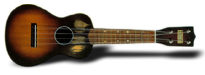
I acquired an absolutely beat up but restorable Kumalae Style 1 soprano ukulele, which has the classic rope trim around the sound hole and top. I have repaired all the cracks, re-glued all the separations, and made some other miscellaneous repairs, but I am currently at an impasse. There are a couple of very small sections of trim that are missing, and I cannot seem to find anyone who manufacturers or sells this trim.
I think that making the trim myself is beyond my abilities. I have searched the internet to see if the more popular stringed instrument building sites carry this purfling, but cannot locate any. Does anyone know if this trim can be purchased?
Here is a link to a fine example of the exact ukulele I am restoring:
http://bernunzio.com/products/1014515
Thanks.
|
|
|
|
|
|
|
|
|
Posted By:
duane
|
Date: 3/9/2010 8:45:44 PM |
| What you are looking for is called rope binding. Purfling is the inlay that is usually inside the binding. No one sells this type of binding that I am aware of. You will have to make it yourself or have a local luthier help you out. Good luck.
|
|
|
|
|
Posted By:
ToeBone
|
Date: 3/10/2010 9:37:25 AM |
| Even if you could find it the styles vary so much in size, pattern, and colors that it would be difficult to match. I feel your pain, though, since I'm looking for the old Harmony style with red/green/black. My only hope is to scavenge some off of another project uke of the same vintage.
|
|
|
|
|
Posted By:
Mattman
|
Date: 3/10/2010 11:15:33 AM |
I heard somewhere that the Japanese have
an old tradition of repairing valued
objects, like a cracked vase, with
rare & precious patch materials, such as gold.
That way, the damage itself become a thing of
beauty, adding to the overall beauty of the
object. Okay, so gold won't work on your Kumalae,
but perhaps some beautiful patches of ebony, or
maple might work?
Just an idea.
Cheers,
-Mattman
|
|
|
|
|
Posted By:
ChefJeff
|
Date: 3/10/2010 12:09:37 PM |
I've never done it but I've read about making "rope" style binding. I think the process is to rip down narrow strips of wood (or cut strips of plastic binding material to length, glue the strips up into a sheet, then cut strips of binding off the end of the sheet. Obviously, the specific "rope" pattern is determined by how you lay up the strips. Also by whether the cross cuts are made square the the edges of the strips or, as in this case, at an angle.
As I said, I haven't done it so if you decide to make this a DIY project, seek advice from someone knowledgeable.
|
|
|
|
|
Posted By:
PHMike
|
Date: 3/10/2010 12:14:58 PM |
LMII selles rope binding but it probably won't match what you have.
Google - rope binding - http://uketalk.com/luthier-tutorials/rope-binding.htm - It's even a ukulele site.
|
|
|
|
|
Posted By:
Dasher
|
Date: 3/10/2010 5:16:07 PM
(Updated: 3/10/2010 5:32:23 PM)
|
I hate to take issue with the likes of Bernunzio Brothers; but I don't believe that the uke pictured is a Kumalae Style 1. The Style 1 is a plain ukulele with no binding at all. Kumalae also made a Style 0 that was totally plain w/o
any trim around the sound hole. His models ran from the 0 to a 5. I believe the one pictured is considered a Style 3. I have a Style 1 which has no trim except 3 concentric rings around the sound hole and a Style 5 which has all kinds of trim as well as a specially shaped headstock. Of course Ol' Jonah made ukuleles for some 30 years and there were small variations within each style; but I've never seen a Style 1 with rope binding around the body..
There happens to be a recent Kumalae post on the Marketplace. It's a Style 1 with trim only around the sound hole.
|
|
|
|
|
Posted By:
ToeBone
|
Date: 3/10/2010 6:18:20 PM |
I didn't look at it until now, but you are right, Dasher, that's a style 3.
Here's an article on the Hawaiian styles:
http://ukuzoo.com/blogs/post/About-Vintage-Hawaiian-Ukulele-Styles.aspx
|
|
|
|
|
Posted By:
duane
|
Date: 3/10/2010 9:08:50 PM |
I think that if you are only missing a few pieces of the binding, you would be much better off making individual blocks and fitting them to the uke sides by hand. Trying to make a long piece of rope binding and then trying to bend it around the edge of a soprano is problematic. I gave up on that technique a long time ago. I find it actually easier and less time consuming to glue one block at a time. The results is less open spaces or gaps and better looking binding in the end.
Another tip, you don't have to use koa or maple to get the right color. There are many woods that work fine and you can always add a little stain to the blocks after they are on.
|
|
|
|
|
Posted By:
imakeukuleles
|
Date: 3/10/2010 11:07:29 PM |
You could take the existing binding off and replace all of it. That way it would match and you could buy the rope binding new.
I have made rope binding in the past. It's not that difficult and kind of fun to do. It doesn't take that many specialized tools.
There are some very good tutorial posts on Hana Lima 'Ia.
Good luck.
|
|
|
|
|
Posted By:
jbirsner
|
Date: 3/12/2010 11:00:55 PM |
| Do I remember a video from Mike Da Silva's shop with binding that might or might not match your project?
|
|
|
|
|
Posted By:
Rick Turner
|
Date: 3/13/2010 8:29:23 PM |
Michael Gurian makes the rope binding that we use. It comes with a thin white line on one side and a thin black line on the other. You can choose which side goes in, then bend it and glue it in place just proud of the surface of the sides. Then sand off the protruding side, and you're down to rope.
For restoration, I'd be more likely to make individual pieces out of rectangular cross section woods and glue them in place one at a time as has been suggested.
|
|
|
|